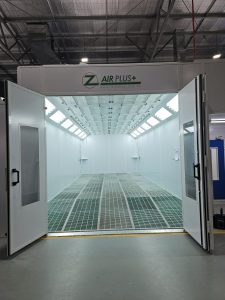
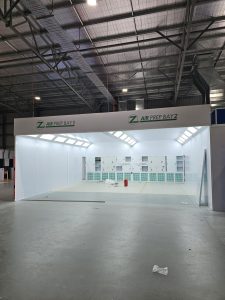
Steele Shafer, NSW Sales and NSW Division Manager at R&I Zambesi, lays out the paint department around how the shop actually repairs cars. The Z-Air installation is what is left once that layout is settled.
The experience.
Steele has spent 20 years in the panel industry, including running and working in the family business. He has lived the “Monday morning the booth is full, the painter is waiting on a mix, and a car that only needed a bumper is blocking a heavy hit” That is the view from the filter he uses on a facility upgrade. He is not there to drop a cabin into whatever corner is free.
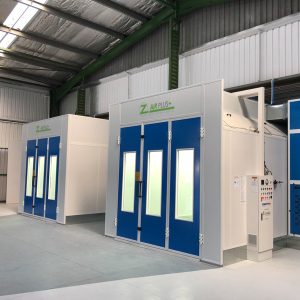
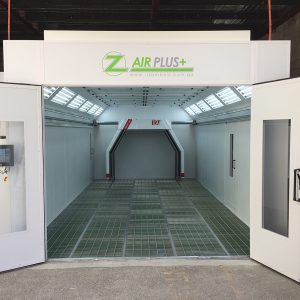
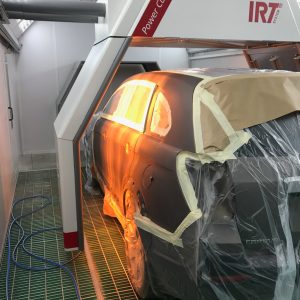
R&I Zambesi has built and serviced spray booths in Australia for more than 40 years, from Peakhurst in Sydney. Z-Air booths are made to order for the site: exceptional value full downdraft cabins such as the Z-Air Plus include direct-fired gas bake, variable-speed fans, and recirculation on the bake cycle… The same team supplies the mixing room and the preparation bays, so the three pieces of equipment can be planned as one department rather than three separate purchases.
Walking the workshop – the process.
Steele starts at assessment where the vehicle come in and finishes it where it leave the workshop, because that is the path a job actually takes. A booth that sprays well and sits in the wrong place still creates the queue.
He measures the floor space the shop has, considering door swings, machine position, column lines and even where a non-driver can be pushed in including where parts carts can pass a car that is already masked. He then asks what a normal week looks like, and what a bad week looks like. Weekly repair count and repair severity decide the plant. A shop whose book is mostly one- and two-panel jobs does not need the same cabin, prep count or mix-room position as a shop whose week is structural hits and full resprays.
From that he specifies the spray booth, the mixing room and the preparation bays together. The aim is fewer hand-offs, a cleaner spray environment, and a booth that is spraying instead of waiting.
How that becomes a Z-Air recommendation
Steele turns those principles into a recommendation the owner can actually build.
Assessment and strip stay off the production aisle, so estimating does not block a bay that should be repairing. Preparation bays sit on the path into the booth, with enough positions that primer and masking are not done inside the cabin. Where the week is mostly light repairs, a prep bay can double as the quick lane, keeping four-panel-and-under jobs out of the main booth cycle. The mixing room goes between the booth and the prep bays, short walk, ventilated, and out of the panel aisle, because a painter crossing the workshop for a mix is lost booth time. The booth itself is sized to the severe jobs, not the average job, and placed so a car can enter and leave without reversing through work in progress. Clean and polish is last, and separate, so compound dust never reaches a wet panel.
He will change the recommendation if the owner’s target is different. Some shops need capacity. Some need one more heavy-hit bay and are happy to keep light work in prep. Some have a column, a roller door or a neighbour that rules out the textbook plan. He listens to that, then works inside it.
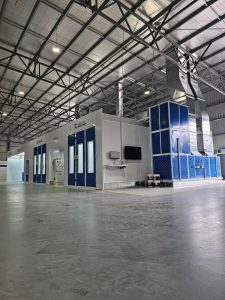
The installations are the record of that conversation. A recent Z-Air paint department for Fortress Collision Repair Services in Albury, taken from an empty workshop to a working department, used two oversized 10 metre Z-Air Plus booths, double-car preparation bays with separation curtains, and a central mixing room, commissioned as one facility. The curtains, the shared mix room and the booth length are layout decisions, not accessories. They exist so two jobs can be prepped without contaminating each other, the painter is never far from the mix, and a longer repair still fits the cabin the shop actually bought.
That is the work Steele is doing in New South Wales: 20 years of knowing where a panel shop loses the day, applied to the floor the customer has, and finished as a Z-Air booth, mix room and preparation setup built for the repairs they intend to do.
What a good layout does
A good layout starts from the queue the owner can already see: cars waiting to be painted. A bigger cabin is not the first fix. The booth only earns its keep if the work around it is ready.
Mixing, preparation, staging and masking, the spray itself, and the polish all have to be given a place. Colour is matched before the car is in the cabin, so booth time is not spent on a spectro reading. Mixing accuracy and waste sit in the mix room, close to the booth, not across the workshop. Preparation is where panels are cleaned, sanded and masked, and where a waterborne basecoat can be given moving air to flash. Anything that can be done outside the cabin should be done outside it. The booth is for spraying and baking.
Cleanliness is part of the layout. The mix room and the booth stay free of panel dust, and the polish bay stays out of the spray aisle, so compound never reaches a wet panel. Materials are replenished to the job, not fetched in the middle of a cycle. Finish quality and cycle time are balanced at the buff, not by leaving a car in the cabin longer than the paint needs.
The test is simple. If the flow is right, more cars get painted. The layout is drawn from accepting the car at the front to detailing at the back, not from the booth outward. Heavy hits, fit-up and light repairs each have a path that does not cross the others. Design, equipment and workflow are one system: the booth, the prep bays and the mix room are sized and placed for the repairs the shop actually does, in the building it actually has.
NSW rules sit under that plan. Spray work belongs in an enclosed booth under negative pressure, built and maintained to AS/NZS 4114:2020, which also covers mixing rooms. Exhaust discharges vertically, clear of the roof. The plant is legal as well as productive.